26 January, 2012

Five Reasons Why Allah SWT Uses Problems

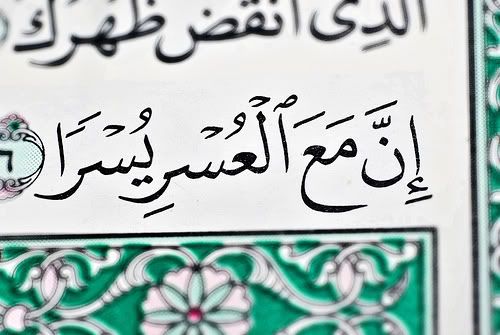
"indeed, with hardship comes relief "  Quran

The problems you face will either defeat you or develop you – depending on how you respond to them. Unfortunately, most people fail to see how Allah wants to use problems for good in their lives. They react foolishly and resent their problems rather than pausing to consider what benefit they might bring.

Here are five ways Allah wants to use the problems in your life:

1. Allah SWT uses problems to DIRECT you.

Sometimes Allah must light a fire under you to get you moving. Problems often point us in a new direction and motivate us to change. Is Allah trying to get your attention? “Sometimes it takes a painful situation to make us change our ways.”

2. Allah SWT uses problems to INSPECT you.

People are like tea bags … if you want to know what’s inside them, just drop them into hot ever water! Has Allah tested your faith with a problem? What do problems reveal about you? “When you have many kinds of troubles, you should be full of joy, because you know that these troubles test your faith, and this will give you patience.”

3. Allah SWT uses problems to CORRECT you.

Some lessons we learn only through pain and failure. It’s likely that as a child your parents told you not to touch a hot stove but you probably learned by being burned. Sometimes we only learn the value of something … health, money, a relationship by losing it. “It was the best thing that could have happened to me, for it taught me to pay attention to your laws.”

4. Allah SWT uses problems to PROTECT you.

A problem can be a blessing in disguise if it prevents you from being harmed by something more serious. Last year a friend was fired for refusing to do something unethical that his boss had asked him to do. His unemployment was a problem – but it saved him from being convicted and sent to prison a year later when management’s actions were eventually discovered. “You intended to harm me, but Allah intended it for good …

5. Allah SWT uses problems to PERFECT you.

Problems, when responded to correctly, are character builders. Allah is far more interested in your character than your comfort. Your relationship to God and your character are the only two things you’re going to take with you into eternity. “We can rejoice when we run into problems … they help us learn to be patient. And patience develops strength of character in us and helps us trust Allah more each time we use it until finally our hope and faith are strong and steady.”

Here’s the point:

Allah is at work in your life – even when you do not recognize it or understand it. But it’s much easier and profitable when you cooperate with Him. “Success can be measured not only in achievements, but in lessons learned, lives touched and moments shared along the way”

Allah SWT Knows Best.
~by Shaykh Salih al-Fawzaan


21 January, 2012

Ya Allah

All my praises are for Allah, my lord the one who is always there
He knows every sinful thought but his displeasure I can’t bear
I ask each day Ya Allah please don’t let me stray
I glorify him with word and deed and not only when I pray

My sins I carry as my luggage throughout my entire life
And although sinful I am, to please Allah is for which I strive
Each day I say Ya Allah forgive me and save me from hells fire
It is you I follow and worship Ya Allah you know I’m no liar

I seek protection in you Allah because as you know I am weak
I do not wish to falter for it is pleasure in Jannah I seek
Ya Allah I ask for your help because to stray is what I fear
So I read Qur’an and pray to remember you’re always near

Ya Allah guide all my actions and make my faith strong
Please help me to know what’s right so I won’t do wrong
Ya Allah our creator who made us all from clay
Ya Allah you are the one who can make sure we won’t stray

Like all humans I’m an imperfect creature and at times I will do wrong
While I follow the road to Jannah which is difficult and long
Ya Allah you know what’s in my heart and my words you hear
And no matter what I say or do my lord Allah is always here

So all my praises are for you Allah every day and night
I will do my best to follow your rules I will with all my might
Ya Allah thanks for guiding me and thanks for this lives test
I will work so hard to follow them so I know in Jannah I will rest   
~by a Sister in Islam


02 January, 2012

Happiness When Shared, Is Doubled

A great note for all, it will take just 37 seconds to read this and change your thinking.
Two men, both seriously ill, occupied the same hospital room.
One man was allowed to sit up in his bed for an hour each afternoon to help drain the fluid from his lungs.
His bed was next to the room’s only window.
The other man had to spend all his time flat on his back.
The men talked for hours on end.
They spoke of their wives and families, their homes, their jobs, their involvement in the military service, where they had been on vacation…
Every afternoon, when the man in the bed by the window could sit up, he would pass the time by describing to his roommate all the things he could see outside the window.
The man in the other bed began to live for those one hour periods where his world would be broadened and enlivened by all the activity and color of the world outside.
The window overlooked a park with a lovely lake.
Ducks and swans played on the water while children sailed their model boats. Young lovers walked arm in arm amidst flowers of every color and a fine view of the city skyline could be seen in the distance.
As the man by the window described all this in exquisite details, the man on the other side of the room would close his eyes and imagine this picturesque scene.
One warm afternoon, the man by the window described a parade passing by.
Although the other man could not hear the band – he could see it in his mind’s eye as the gentleman by the window portrayed it with descriptive words.
Days, weeks and months passed.
One morning, the day nurse arrived to bring water for their baths only to find the lifeless body of the man by the window, who had died peacefully in his sleep.
She was saddened and called the hospital attendants to take the body away.
As soon as it seemed appropriate, the other man asked if he could be moved next to the window. The nurse was happy to make the switch, and after making sure he was comfortable, she left him alone.
Slowly, painfully, he propped himself up on one elbow to take his first look at the real world outside.
He strained to slowly turn to look out the window besides the bed.
It faced a blank wall.
The man asked the nurse what could have compelled his deceased roommate who had described such wonderful things outside this window.
The nurse responded that the man was blind and could not even see the wall.
She said, ‘Perhaps he just wanted to encourage you.’
Epilogue:
There is tremendous happiness in making others happy, despite our own situations.
Shared grief is half the sorrow, but happiness when shared, is doubled.
If you want to feel rich, just count all the things you have that money can’t buy.

-The origin of this note is unknown, but it brings good luck to everyone who passes it on.

The Woman With Strong Iman

A strong woman works out everyday to keep her body in shape,
But a woman with strong iman prostrates in prayer to keep her soul in shape…

A strong woman isn’t afraid of anything,
But a woman with strong iman shows courage in the midst of fear…

A strong woman won’t let anyone get the best of her,
But a woman with strong iman gives the best of herself to everyone…

A strong woman makes mistakes and avoids making the same in the future,
But a woman with strong iman realises life’s ‘mistakes’ can also be Allah’s blessings and capitalises on them…

A strong woman walks sure footedly…
But a woman with strong iman has sabr (patience) when she falls…

A strong woman wears the look of confidence on her face,
But a woman with strong iman wears grace…

A strong woman strives to look beautiful and perfect,
But a woman with strong iman knows that she can possess nothing more attractive than the adornment of faith and the beauty of taqwa…

A strong woman has faith knowing she is strong enough for the journey,
But a woman with strong iman has faith that it is in the journey that she will become strong…

16 December, 2011

30 Reasons To Avoid Being Angry And Argumentative

How difficult is it to practice patience when being provoked? At the same time, how many times have we responded much too sensitively, although we were not the clear target of anyone’s malice?

How many hearts have been lost in an effort to win arguments? And yet, as human beings it is natural and even our right to disagree, and to think critically. One of the most difficult challenges of character for Muslims of every background is being able to practice hilm (forbearance) during times of anger and disagreement—that is to be able to disagree with a dignified and generous spirit, and to think critically without being argumentative, stubborn, and condescending. It is because we as a community fall into this so much, and on so many levels, that I found this issue to be a relevant reminder to myself and others.

The activist argues about strategy, the student argues about fiqh and other branches of knowledge,  the community leader argues in the board room, and the Imam with those who disagree with his style or approach. Whether it be with our family, friends, community members or the Islamophobe—we often find ourselves in situations where anger and argumentation can creep in, sour the mood, and sully the spirit. Below is a collection of Quranic verses, Prophetic narrations, and sayings of righteous people mostly taken from Sa’eed Hawwa’s work “Selected Writings on Purifying the Soul.” These statements remind us to prevent anger and argumentation from getting the better of us.

May Allah help us to remember that when we deal with people, our transactions are actually with Him and not His creation. As such, may awareness of His presence (ihsan) bring goodness from our speech and characters during times of difficulty as well as ease. Ameen.

1. “And when the foolish address them (with bad words) they reply back with ‘Salamaa’ (peaceful words of gentleness).” (Qur’an, 25:63)

2. “If they pass by some vain speech or play, they pass by it with dignity.” (Qur’an, 25:72)

3. “And be moderate in your pace and lower your voice; indeed, the most disagreeable of sounds is the voice of donkeys… But of the people is he who disputes about Allah without knowledge or guidance or an enlightening Book.” (Qur’an, 31:19-20)

4. The Prophet Muhammad ﷺ (peace be upon him) said: “He who gave up disputing while he is right, a palace of high rank in Paradise will be built for him. He who gave up disputing while he is a fabricator, a palace in the center of Paradise will be built for him.” (al-Tirmidhi who declared it as hasan)

5. “There are no people who went astray after having been guided except for indulging in disputation.” (al-Tirmidhi)

6. The Messenger of Allah ﷺ repeated three times, “Those who search deeply for confusing questions have perished.” (Muslim)

7. “Do not dispute with your brother, ridicule him, nor promise him and then break your promise.” (al-Tirmidhi)

8. Bilal ibn Sa’d radiAllahu `anhu (ra) said, “If you see a disputing, arrogant, and bigoted person, bear in mind that they are utterly lost.”

9. Luqman `alayhi assalam (as) said to his son, “O son! Do not dispute with the knowledgeable lest they detest you.”

10. `Umar (ra) said, “Do not learn knowledge for three things and do not leave it for three things. Do not learn it to dispute over it, to show off with it, or to boast about it. Do not leave seeking it out of shyness, dislike for it, or contending with ignorance in its stead.”

11. It was narrated that Abu Hanifa said to Dawud al-Taa’i, “Why do you prefer seclusion?” Dawud replied, “To struggle against myself to leave disputing.” Abu Hanifah said, “Attend meetings, listen to what is said, and remain silent.” Dawud said, “I have done so, but I have found nothing heavier than this.”

12. `A’ishah (ra) narrated that the Prophet Muhammad ﷺ said, “The most hated person with Allah is the most quarrelsome person.” (al-Bukhari)

13. Ibn Qutaybah said that his disputant said to him, “What is the matter with you?” He replied to him, “I will not dispute with you.” The disputant then said, “Thus you have come to know that I am right.” Ibn Qutaybah responded, “No, but I respect myself more than that.” At this the disputant retracted and said, “And I will not claim a thing that is not my right.”

14. The Messenger of Allah ﷺ said: “The one initiating abuse incurs the sin of abusing as long as the other did not return it.” (Muslim)

15. “The believer does not curse.” (al-Tirmidhi who declared it hasan)

16. “The believer does not defame, abuse, disparage, nor vilify.” (al-Tirmidhi, sahih)

17. “Do not invoke Allah’s curse, His anger, or Hellfire.” (al-Tirmidhi who declared it hasan sahih)

18. “Men accustomed to cursing will not be intercessors or witnesses on the Day of Resurrection.” (Muslim)

19. Abdullah ibn ‘Amr (ra) narrated, “I asked the Messenger of Allah ﷺ about what saves me from Allah’s wrath, and he said, “Do not become angry.” (al-Tabarani and Ibn Abdul Barr) Ibn `Umar, Ibn Mas’ud, and Abu Darda’ (ra) relate similar conversations on their own behalf.

20. The Messenger of Allah ﷺ said, “He who is victorious over his passion at the time of anger is the strongest among you. He who forgives having the power to release (his anger and take revenge) is the most patient among you.” (a-Baihaqi in Shu’ab al-Imaan)

21. Abu Hurairah (ra) narrated, “The Messenger of Allah ﷺ said, ‘The strong person is not he who has physical strength but the person is strong if he can control his anger.” (al-Bukhari and Muslim)

22. `Umar ibn Abdul Aziz wrote to one of his governors and said, “Do not punish at the time of anger. If you are angry with any man, keep him in detention. When your anger is appeased punish him in proportion to his crime.”

23. ‘Ali ibn Zaid mentioned, “A man of the Quraysh spoke harshly to the Caliph `Umar Ibn ‘Abdul ‘Aziz who remained silent for a long time and then said, “You wish that the devil rouses in me the pride of the Caliphate and I treat you so rudely that you can take revenge tomorrow (in the Afterlife) on me.”

24. Ibn ‘Abbas (ra) narrated, the Messenger of Allah ﷺ said, “And when you get angry, keep silent.” (Ahmad, Ibn Abi Dunya, al-Tabarani, and al-Bayhaqi)

25. The Messenger of Allah ﷺ said, “Anger is a burning coal. It burns in the heart.” (al-Tirmidhi and al-Bayhaqi)

26. “When anyone of you gets angry, let him perform ablution because anger arises from fire.” (Abu Dawud)

27. “Nobody swallows a more bitter pill than that of anger—seeking the satisfaction of Allah.” (Ibn Majah)

28. `Umar (ra) said, “He who fears Allah cannot give an outlet to his anger (by sinning). He who fears Allah cannot do what he likes.”

29. A nomad said to the Messenger of Allah ﷺ “Advise me.” And he ﷺ said, “If a man defamed you with what he knows about you, do not defame him with what you know about him. For the sin is against him.” The nomad said, “I never abused any person after that.”

30. Al-Hasan (ra) said, “He that did not safeguard his tongue did not understand his religion.”

You thought it was over didn’t you? Here is a little something extra to encourage us not only to avoid such negative traits, but to also proactively seek positive ones in their place.

10 Reasons to Strive for Generosity of Spirit and Kindness in Speech

1. The Messenger of Allah ﷺ said, “Kind speech and feeding (the hungry) guarantee you Paradise.” (al-Tabarani)

2. “And speak nicely to people.” (Qur’an, 2:83)

3. “When you are greeted with a greeting, greet in return with what is better than it, or (at least) return it equally.” (Qur’an, 4:86) Ibn Abbas commented on this and said, “He who greets you return his greeting in better words even if he were a Magian.1 He also said, “If Pharoah were to speak nicely to me, I would do so to him.”

4. Anas (ra) narrated that the Messenger of Allah ﷺ said, “Verily there are chambers in Paradise; their insides and outsides can be seen – for him who spoke kindly and fed (the hungry).” (al-Tirmidhi)

5. He ﷺ also said, “A good word is also a charitable deed.” (Muslim)

6. “Ward off the Fire even if by giving half a date in charity. If you could not afford that then utter a kind word.” (al-Bukhari and Muslim)

7. `Umar (ra) said, “Generosity is an easy thing. It is a smiling face and kind words.”

8. Some wise men said, “Do not be stingy with a word that does not arouse your Lord’s wrath yet it pleases your brother. It may happen that Allah gives you the reward of those who do good works.”

9. “And let not those among you who are blessed with graces and wealth swear not to give to their kinsmen, the poor, and those who left their homes for Allah’s cause. Let them pardon and forgive. Do you not wish that Allah should forgive you?” (Qur’an, 24:22). Abu Bakr (ra) had cut off his financial support of his relative Mustah because Mustah had participated in the slander against his daughter `A’ishah (ra). After this verse was revealed, he resumed and even increased the amount he gave Mustah in financial support.

10. “Show forgiveness, enjoin what is good, and turn away from the foolish.” (Qur’an, 7:199)

-courtesy of suhaibwebb.com

10 December, 2011

Life Is Like A Cup Of Coffee

A group of alumni, highly established in their careers, got together to visit their old university professor. Conversation soon turned into complaints about stress in work and life.

Offering his guests coffee, the professor went to the kitchen and returned with a large pot of coffee and an assortment of cups - porcelain, plastic, glass, crystal, some plain looking, some expensive, some exquisite - telling them to help themselves to the coffee.

When all the students had a cup of coffee in hand, the professor said: "If you noticed, all the nice looking expensive cups have been taken up, leaving behind the plain and cheap ones. While it is normal for you to want only the best for yourselves, that is the source of your problems and stress.

Be assured that the cup itself adds no quality to the coffee. In most cases it is just more expensive and in some cases even hides what we drink. What all of you really wanted was coffee, not the cup, but you consciously went for the best cups... And then you began eyeing each other's cups.

Now consider this: Life is the coffee; the jobs, money and position in society are the cups. They are just tools to hold and contain Life, and the type of cup we have does not define, nor change the quality of life we live.

Sometimes, by concentrating only on the cup, we fail to enjoy the coffee. Savor the coffee, not the cups! The happiest people don't have the best of everything. They just make the best of everything. Live simply. Love generously. Care deeply. Speak kindly. -Author Unknown

The Four Wives

Once upon a time, there was a rich merchant who had 4 wives.  He loved the 4th wife the most and adorned her with rich robes and treated her to delicacies.  He took great care of her and gave her nothing but the best.
He also loved the 3rd wife very much.  He's very proud of her and always wanted to show off her to his friends.  However, the merchant is always in great fear that she might run away with some other men.

He loved his 2nd wife, too.  She is a very considerate person, always patient and in fact is the merchant's confidante. Whenever the merchant faced some problems, he always turned to his 2nd wife and she would always help him out and tide him through difficult times.

Now, the merchant's 1st wife is a very loyal partner and has made great contributions in maintaining his wealth and business as well as taking care of the household. However, the merchant did not love the first wife and although she loved him deeply, he hardly took notice of her.

One day, the merchant fell ill. Before long, he knew that he was going to die soon.  He thought of his luxurious life and told himself, "Now I have 4 wives with me. But when I die, I'll be alone. How lonely I'll be!" Thus, he asked the 4th wife, "I loved you most, endowed you with the finest clothing and showered great care over you. Now that I'm dying, will you follow me and keep me company?"

"No way!" replied the 4th wife and she walked away without another word. The answer cut like a sharp knife right into the merchant's heart.

The sad merchant then asked the 3rd wife, "I have loved you so much for all my life. Now that I'm dying, will you follow me and keep me company?"

"No!" replied the 3rd wife. "Life is so good over here!  I'm going to remarry when you die!"

The merchant's heart sank and turned cold.

He then asked the 2nd wife, "I always turned to you for help and you've always helped me out. Now I need your help again. When I die, will you follow me and keep me company?"

"I'm sorry, I can't help you out this time!" replied the 2nd wife. "At the very most, I can only send you to your grave."

The answer came like a bolt of thunder and the merchant was devastated.

Then a voice called out : "I'll leave with you. I'll follow you no matter where you go.

"The merchant looked up and there was his first wife. She was so skinny, almost like she suffered from malnutrition. Greatly grieved, the merchant said, "I should have taken much better care of you while I could have!"


We all have 4 wives in our lives. The 4th wife is our body. No matter how much time and effort we lavish in making it look good, it'll leave us when we die.

Our 3rd wife is our possessions, status and wealth. When we die, they all go to others.

The 2nd wife is our family and friends. No matter how close they had been there for us when we're alive, the furthest they can stay by us is up to the grave.

The 1st wife is in fact our soul, often neglected in our pursuit of material wealth and sensual pleasure. It is actually the only thing that follows us wherever we go. Perhaps it's a good idea to cultivate and strengthen it now rather than wait until we're on our death bed to lament.
 -Author Unknown

30 November, 2011

Marry The Seven Types Of Pearls

1. The Patient:
The women who remains patient in all circumtances and never whines moans and complains when some trouble or affliction hits her, She Turns to Allah for help.

2. The Protector:
The women who Protects her husband wealth and her chastity when he is away from home. When he returns, she does not burden him with the day’s problem, but listen attentively to his need and does her best to take his tiredness away.

3. The Lover:
The women who adores her husband and craves for his children to the extent that whenever her husband glances at her du’aa pours for her from the bottom of his heart.

4. The Do-Gooder:
The women who has an excellent reputation in society for being kind, caring and courteous to all, She is good with her neighbors, relatives and never backbites or displays jealousy.

5. The Content:
The women who never Casts her eyes at material things and is content with ever little her husbands gives her, She is thankful to him for every morsel that he feeds her, every clothe that he gifts her including the roof over her head, She makes her greatfulness known to him in words and actions, and thus soothes her husband’s heart.

6. The Pious:
The women who spends much of her day in dhikr, tilaawatul Qur’an and Salah and her nights is praying tahajjud and crying to Allah for forgiveness, She encourages her husband to give da’wah in his sparetime.

7. The Sweet Smiler:
The women who smiles excessively especially when her husband is at home, She always talk gently that it seems that pearls are dripping from her mouth, She never raises her voices while talking to her husband, If her husband is angry with her for some reason and shout her, she does not answer him back but maintains as dignified silence, When he has calm down, she offers him cool water and apologizes to him even if she wasn’t at fault.
-voice of the heart

27 November, 2011

Forgiveness : The Glue for a Broken Heart


We are the broken-hearted.
 Betrayal, oppression, deception, whatever it may be that happened to us—the result is the same, a broken heart at the hand of a human. A broken heart that feels like it can never be fixed, and it was entirely someone else’s fault. It would be enough if they had just hurt us, and all we had to do is deal with the pain that came from their actions, but no. Rather, the hurt, the pain, the brokenness…it brought out the worst in us, allowing us to see our own faults, and painful ones at that. How do we go on? How do we move on with life and shift our focus back to the One who deserves it? How do we stop obsessing over the wrongs that occurred and start focusing on the only One who should be obsessed over? One word: Forgiveness.

When a person is soaked in sin and wants to return to Allah subhanahu wa ta`ala (exalted is He), they begin with repentance. The person whole-heartedly turns to Allah, asking Him to forgive utterly and completely, even though the asker may not be deserving. Likewise, the path back to Allah (swt) after a severely broken heart, at the hand of a human, is forgiveness.

When it comes to forgiveness, the key is shifting how we see forgiveness. As always, Allah (swt) has given us a beautiful tool to make this shift, and that is the story of Prophet Yusuf `alayhi as-salaam (peace be upon him).

Of the many fruitful parts of the story of Prophet Yusuf (as), is that of his being wronged by the wife of his master. She attempted to seduce our beloved Prophet Yusuf (as). Not only did she attempt to seduce him, but she landed him in jail by blaming him of the unthinkable instead of taking the blame! IMAGINE! This is a woman whom, as the wife of his master, he was supposed to be able to trust. This was a woman whom he served during the day. Yet when her desires took over, she wronged him many times over!

Despite all of this, Prophet Yusuf (as) did not act wrongfully, nor did he hold a grudge. Why? Prophet Yusuf (as) knew the reality of forgiveness. When all was exposed and the truth revealed, Yusuf (as) made a revolutionary statement. He said: “I do not free myself from all blame. Truly, the nafs (base self) is inclined to evil, except for those who my Lord grants His Mercy. Truly, my Lord is Oft-Forgiving, Most Merciful.”

Allahu Akbar! (God is Greater!) A huge, humbling, life-changing lesson we can take from his statement is: You are not the oppressor in this situation only because Allah (swt) has blessed you with His Mercy. Every soul has the ability to wrong others, every soul has the ability to be the oppressor, and only Allah’s mercy prevents that.

The next time we begin to feel this immense and absolute anger towards the person who has harmed us—let’s make that shift, and forgive. Forgive the one who has wronged us not because that person deserves it; rather, forgive them as a sign of gratitude to Allah (swt). Forgive as a symbol of our thanking Him for blessing us to be of those who have never thought of hurting a person in the manner that we have had to endure. Forgive as a symbol of our thanking Him for making us the oppressed and not the oppressors. There is no sin in being the oppressed; rather, Allah tells us that He is with the one who has been wronged and is constantly answering their du`a’ (supplication). But what of the oppressor? They have the anger of Allah (swt) and the displeasure of Allah (swt). And realize that the one who has oppressed you has oppressed themselves more. For it is that person who will have to stand in front of Allah (swt) on the Day of Judgment and have their oppression accounted for, if they are not of those who have repented. So on that Day, they will be their own greatest victims.

Forgive as a statement that says, ‘Oh Allah I’m not forgiving them for their own sake, rather I am forgiving them as a sign of gratitude to You for steering me clear of those desires. I’m forgiving them out of my love for You. I’m forgiving them because I know You love it when a slave of Yours is merciful to others and I want to be of the ones that You love. My desires tell me to wish evil for them and to hold this grudge, but I put You over my own desire and I forgive them.’

Pray for those who hurt you. Pray for those who do not accept you. Love them for the sake of Allah. Pray that they realize their wrongs before they face their Lord. Pray that no one ever has to go through the same thing you did at the hands of this person. Love your oppressor for the sake of Allah, because love is the only emotion that is strong enough to penetrate a hardened heart, but know it will take time. Perhaps years, but you will be a better person because you chose to take the higher route: Forgiveness.  
Source: suhaibwebb.com

24 November, 2011

50 Things You Need To Know About Marital Relationships

1. Great relationships don’t just happen; they are created. You have to work at it.
2. If your job takes all of your best energy, your marriage will suffer.
3. One of the greatest gifts you can give your spouse is your own happiness.
4. It is possible to love and hate someone at the same time.
5. When you complain about your spouse to your friends, remember that their feedback can be distorted.
6. The only rules in your marriage are those you both choose to agree with.
7. It is not conflict that destroys marriage; it is the cold, smoldering resentment that you hold for a long time.
8. It’s not what you’ve got, it’s what you do with what you have.
9. If you think you are too good for your spouse, think again.
10. Growing up in a happy household doesn’t ensure a happy marriage, or vice versa.
11. It’s never too late to repair damaged trust.
12. The real issue is usually not the one you are arguing about.
13. Love isn’t just a feeling; it is expressed through our actions.
14. Expectations set us up for disappointment and resentment.
15. Arguments cannot be avoided, but destructive arguments can be avoided.
16. One of the greatest gifts you can give your spouse is focused attention.
17. Even people with happy marriages sometimes worry that they married the wrong person.
18. Your spouse cannot rescue you from unhappiness, but they can help you rescue yourself.
19. The cost of a lie is far greater than any advantage you gain from speaking it.
20. Your opinion is not necessarily the truth.
21. Trust takes years to establish and moments to destroy.
22. Guilt-tripping won’t get you what you really want.
23. Don’t neglect your friends.
24. If you think, “You are not the person I married,” you are probably right.
25. Resisting the temptation to prove your point will win you a lot of points.
26. Generosity of spirit is the foundation of a good marriage.
27. If your spouse is being defensive, you might be giving them reasons to be like that.
28. Marriage isn’t 50/50; it’s 100/100.
29. You can pay now or pay later, but the later you pay, the more interest and penalties you acquire.
30. Marriage requires sacrifice, but your benefits outweigh your costs.
31. Forgiveness isn’t a one-time event; it’s a continous process.
32. Accepting the challenges of marriage will shape you into a better person.
33. Creating a marriage is like launching a rocket: once it clears the pull of gravity, it takes much less energy to sustain the flight.
34. A successful marriage has more to do with how you deal with your current reality than with what you’ve experienced in the past.
35. Don’t keep feelings of gratitude to yourself.
36. There is no greater eloquence than the silence of real listening.
37. One of the greatest questions to ask your spouse is “How best can I love you?”
38. Marriage can stay fresh over time.
39. Assumptions are fine as long as you check them before acting upon them.
40. Intention may not be the only thing, but it is the most important thing.
41. Good sex won’t make your marriage, but it’ll help.
42.Privacy won’t hurt your marriage, but secrecy will.
43. Possessiveness and jealousy are born out of fear, not love.
44. Authenticity is contagious and habit-forming.
45. If your spouse thinks something is important, then it is.
46. Marriage never outgrows the need for romance.
47. The sparkle of a new relationship is always temporary.
48.There is violence in silence when it’s used as a weapon.
49. It’s better to focus on what you can do to make things right, then what your partner did to make things wrong.
50. If you think marriage counseling is too expensive, try divorce.

Excerpted from Al Maghrib Institute’s “Fiqh of Love” seminar with Shaykh Waleed Basyouni.

21 November, 2011

Allah Knows Best

Allah knows what’s best for us
So why should we complain
We always want the sunshine
But He knows there must be rain

We always want the laughter
And the merriment of cheer
But our hearts will lose their tenderness
If we never shed a tear.

Allah tests us often
With suffering and with sorrow
He tests us not to punish us
But to help us meet tomorrow

For growing trees are strengthened
If they withstand the storm
And the sharp cut of the chisel
Gave the marble grace and form

Allah tests us often
And for every pain He gives to us
Provided we’re patient
Is followed by rich again

So whenever we feel that everything is going wrong
It is just Allah’s way
To make our spirit’s strong.

Author: Unknown

12 September, 2011

Why Do People Have to Leave Each Other?


When I was 17 years old, I had a dream. I dreamt that I was sitting inside a masjid and a little girl walked up to ask me a question. She asked me: “Why do people have to leave each other?” The question was a personal one, but it seemed clear to me why the question was chosen for me.
I was one to get attached.
Ever since I was a child, this temperament was clear. While other children in preschool could easily recover once their parents left, I could not. My tears, once set in motion, did not stop easily. As I grew up, I learned to become attached to everything around me. From the time I was in first grade, I needed a best friend. As I got older, any fall-out with a friend shattered me. I couldn’t let go of anything. People, places, events, photographs, moments—even outcomes became objects of strong attachment. If things didn’t work out the way I wanted or imagined they should, I was devastated. And disappointment for me wasn’t an ordinary emotion. It was catastrophic. Once let down, I never fully recovered. I could never forget, and the break never mended. Like a glass vase that you place on the edge of a table, once broken, the pieces never quite fit again.
But the problem wasn’t with the vase. Or even that the vases kept breaking. The problem was that I kept putting them on the edge of tables. Through my attachments, I was dependent on my relationships to fulfill my needs. I allowed those relationships to define my happiness or my sadness, my fulfillment or my emptiness, my security, and even my self-worth. And so, like the vase placed where it will inevitably fall, through those dependencies I set myself up for disappointment. I set myself up to be broken. And that’s exactly what I found: one disappointment, one break after another.
But the people who broke me were not to blame any more than gravity can be blamed for breaking the vase. We can’t blame the laws of physics when a twig snaps because we leaned on it for support. The twig was never created to carry us.
Our weight was only meant to be carried by God. We are told in the Quran: “…whoever rejects evil and believes in God hath grasped the most trustworthy hand-hold, that never breaks. And God hears and knows all things.” (Qur’an 2: 256)
There is a crucial lesson in this verse: that there is only one handhold that never breaks. There is only one place where we can lay our dependencies. There is only one relationship that should define our self-worth and only one source from which to seek our ultimate happiness, fulfillment, and security. That place is God.
But this world is all about seeking those things everywhere else. Some of us seek it in our careers, some seek it in wealth, some in status. Some, like me, seek it in our relationships. In her book, Eat, Pray, Love, Elizabeth Gilbert describes her own quest for happiness. She describes moving in and out of relationships, and even traveling the globe in search of this fulfillment. She seeks that fulfillment—unsuccessfully—in her relationships, in meditation, even in food.
And that’s exactly where I spent much of my own life: seeking a way to fill my inner void. So it was no wonder that the little girl in my dream asked me this question. It was a question about loss, about disappointment. It was a question about being let down. A question about seeking something and coming back empty handed. It was about what happens when you try to dig in concrete with your bare hands: not only do you come back with nothing—you break your fingers in the process. And I learned this not by reading it, not by hearing it from a wise sage. I learned it by trying it again, and again, and again.
And so, the little girl’s question was essentially my own question…being asked to myself.
Ultimately, the question was about the nature of the dunya as a place of fleeting moments and temporary attachments. As a place where people are with you today, and leave or die tomorrow. But this reality hurts our very being because it goes against our nature. We, as humans, are made to seek, love, and strive for what is perfect and what is permanent. We are made to seek what’s eternal. We seek this because we were not made for this life. Our first and true home was Paradise: a land that is both perfect and eternal. So the yearning for that type of life is a part of our being. The problem is that we try to find that here. And so we create ageless creams and cosmetic surgery in a desperate attempt to hold on—in an attempt to mold this world into what it is not, and will never be.
And that’s why if we live in dunya with our hearts, it breaks us. That’s why this dunya hurts. It is because the definition ofdunya, as something temporary and imperfect, goes against everything we are made to yearn for. Allah put a yearning in us that can only be fulfilled by what is eternal and perfect. By trying to find fulfillment in what is fleeting, we are running after a hologram…a mirage. We are digging into concrete with our bare hands. Seeking to turn what is by its very nature temporary into something eternal is like trying to extract from fire, water.  You just get burned. Only when we stop putting our hopes indunya, only when we stop trying to make the dunya into what it is not—and was never meant to be (jannah)—will this life finally stop breaking our hearts.
We must also realize that nothing happens without a purpose. Nothing. Not even broken hearts. Not even pain. That broken heart and that pain are lessons and signs for us. They are warnings that something is wrong. They are warnings that we need to make a change. Just like the pain of being burned is what warns us to remove our hand from the fire, emotional pain warns us that we need to make an internal change. That we need to detach. Pain is a form of forced detachment. Like the loved one who hurts you again and again and again, the more dunya hurts us, the more we inevitably detach from it. The more we inevitably stop loving it.
And pain is a pointer to our attachments. That which makes us cry, that which causes us most pain is where our false attachments lie. And it is those things which we are attached to as we should only be attached to Allah which become barriers on our path to God. But the pain itself is what makes the false attachment evident. The pain creates a condition in our life that we seek to change, and if there is anything about our condition that we don’t like, there is a divine formula to change it. God says: “Verily never will God change the condition of a people until they change what is within themselves.” (Qur’an, 13:11)
After years of falling into the same pattern of disappointments and heartbreak, I finally began to realize something profound. I had always thought that love of dunya meant being attached to material things. And I was not attached to material things. I was attached to people. I was attached to moments. I was attached to emotions. So I thought that the love of dunya just did not apply to me. What I didn’t realize was that people, moments, emotions are all a part of dunya. What I didn’t realize is that all the pain I had experienced in life was due to one thing, and one thing only: love of dunya.
As soon as I began to have that realization, a veil was lifted from my eyes. I started to see what my problem was. I was expecting this life to be what it is not, and was never meant to be: perfect. And being the idealist that I am, I was struggling with every cell in my body to make it so. It had to be perfect. And I would not stop until it was. I gave my blood, sweat, and tears to this endeavor: making the dunya into jannah. This meant expecting people around me to be perfect. Expecting my relationships to be perfect. Expecting so much from those around me and from this life. Expectations. Expectations. Expectations. And if there is one recipe for unhappiness it is that: expectations. But herein lay my fatal mistake. My mistake was not in having expectations; as humans, we should never lose hope. The problem was in *where* I was placing those expectations and that hope. At the end of the day, my hope and expectations were not being placed in God. My hope and expectations were in people, relationships, means. Ultimately, my hope was in this dunya rather than Allah.
And so I came to realize a very deep Truth. An ayah began to cross my mind. It was an ayah I had heard before, but for the first time I realized that it was actually describing me:  “Those who rest not their hope on their meeting with Us, but are pleased and satisfied with the life of the present, and those who heed not Our Signs.” (Qur’an, 10:7)
By thinking that I can have everything here, my hope was not in my meeting with God. My hope was in dunya. But what does it mean to place your hope in dunya? How can this be avoided? It means when you have friends, don’t expect your friends to fill your emptiness. When you get married, don’t expect your spouse to fulfill your every need. When you’re an activist, don’t put your hope in the results. When you’re in trouble don’t depend on yourself. Don’t depend on people. Depend on God.
Seek the help of people—but realize that it is not the people (or even your own self) that can save you. Only Allah can do these things. The people are only tools, a means used by God. But they are not the source of help, aid, or salvation of any kind. Only God is. The people cannot even create the wing of a fly (22:73).  And so, even while you interact with people externally, turn your heart towards God. Face Him alone, as Prophet Ibrahim (as) said so beautifully: “For me, I have set my face, firmly and truly, towards Him Who created the heavens and the earth, and never shall I give partners to Allah.” (Qur’an,6:79)
But how does Prophet Ibrahim (as) describe his journey to that point? He studies the moon, the sun and the stars and realizes that they are not perfect. They set.
They let us down.
So Prophet Ibrahim (as) was thereby led to face Allah alone. Like him, we need to put our full hope, trust, and dependency on God. And God alone. And if we do that, we will learn what it means to finally find peace and stability of heart. Only then will the roller coaster that once defined our lives finally come to an end. That is because if our inner state is dependent on something that is by definition inconstant, that inner state will also be inconstant. If our inner state is dependent on something changing and temporary, that inner state will be in a constant state of instability, agitation, and unrest. This means that one moment we’re happy, but as soon as that which our happiness depended upon changes, our happiness also changes. And we become sad. We remain always swinging from one extreme to another and not realizing why.
We experience this emotional roller coaster because we can never find stability and lasting peace until our attachment and dependency is on what is stable and lasting. How can we hope to find constancy if what we hold on to is inconstant and perishing? In the statement of Abu Bakr is a deep illustration of this truth. After the Prophet Muhammad ﷺ died, the people went into shock and could not handle the news. But although no one loved the Prophet ﷺ like Abu Bakr, Abu Bakr understood well the only place where one’s dependency should lie. He said: “If you worshipped Muhammad, know that Muhammad is dead. But if you worshipped Allah, know that Allah never dies.”
To attain that state, don’t let your source of fulfillment be anything other than your relationship with God. Don’t let your definition of success, failure, or self-worth be anything other than your position with Him (Qur’an, 49:13). And if you do this, you become unbreakable, because your handhold is unbreakable. You become unconquerable, because your supporter can never be conquered. And you will never become empty, because your source of fulfillment is unending and never diminishes.
Looking back at the dream I had when I was 17, I wonder if that little girl was me. I wonder this because the answer I gave her was a lesson I would need to spend the next painful years of my life learning. My answer to her question of why people have to leave each other was: “because this life isn’t perfect; for if it was, what would the next be called?” source:suhaibwebb.com

28 August, 2011

How To Seek Laylatul-Qadr


Laylat ul-Qadr is the most blessed night. A person who misses it has indeed missed a great amount of good. If a believing person is zealous to obey his Lord and increase the good deeds in his record, he should strive to encounter this night and to pass it in worship and obedience. If this is facilitated for him, all of his previous sins will be forgiven.

Praying Qiyaam

It is recommended to make a long Qiyaam prayer during the nights on which Laylat ul-Qadr could fall. This is indicated in many hadeeths, such as the following:

Abu Tharr (radhiallahu `anhu) relates:

"We fasted with Allah's Messenger (sallallahu `alayhi wa sallam) in Ramadaan. He did not lead us (in qiyaam) at all until there were seven (nights of Ramadaan) left. Then he stood with us (that night - in prayer) until one third of the night had passed. He did not pray with us on the sixth. On the fifth night, he prayed with us until half of the night had passed. So we said, 'Allah's Messenger! Wouldn't you pray with us the whole night?' He replied:

'Whoever stands in prayer with the imaam until he (the imaam) concludes the prayer, it is recorded for him that he prayed the whole night.'…" [Recorded by Ibn Abi Shaybah, Abu Dawud, at-Tirmithi (who authenticated it), an-Nasa'i, Ibn Majah, at-Tahawi (in Sharhu Ma`an il-Athar, Ibn Nasr, al-Faryabi, and al-Bayhaqi. Their isnad is authentic.]

[Point of benefit: Abu Dawud mentioned: "I heard Ahmad being asked, 'Do you like for a man to pray with the people or by himself during Ramadan?' He replied, 'Pray with the people' I also heard him say, 'I would prefer for one to pray (qiyaam) with the imaam and to pray witr with him as well, for the Prophet (sallallahu `alayhi wa sallam) said: "When a man prays with the imaam until he concludes, it is recorded that he prayed the rest of that night." [Masaa'il]]

Abu Hurayrah (radhiallahu `anhu) narrated that the Messenger (sallallahu `alayhi wa sallam) said:

"Whoever stands (in qiyaam) in Laylat ul-Qadr [and it is facilitated for him] out of faith and expectation (of Allah's reward), will have all of his previous sins forgiven." [Al-Bukhari and Muslim; the addition "and it is facilitated for him" is recorded by Ahmad from the report of `Ubaadah Bin as-Samit; it means that he is permitted to be among the sincere worshippers during that blessed night.]

Making Supplications

It is also recommended to make extensive supplication on this night. `A'ishah (radhiallahu `anha) reported that she asked Allah's Messenger (sallallahu `alayhi wa sallam), "O Messenger of Allah! If I knew which night is Laylat ul-Qadr, what should I say during it?" And he instructed her to say:

"Allahumma innaka `afuwwun tuh.ibbul `afwa fa`fu `annee - O Allah! You are forgiving, and you love forgiveness. So forgive me." [Recorded by Ahmad, Ibn Majah, and at-Tirmithi. Verified to be authentic by Al-Albani]

Abandoning Worldly Pleasures for the Sake of Worship

It is further recommended to spend more time in worship during the nights on which Laylat ul-Qadr is likely to be. This calls for abandoning many worldly pleasures in order to secure the time and thoughts solely for worshipping Allah. `A'ishah (radhiallahu `anha) reported:

"When the (last) ten started, the Prophet (sallallahu `alayhi wa sallam) would tighten his izaar (i.e. he stayed away from his wives in order to have more time for worship), spend the whole night awake (in prayer), and wake up his family." [Al-Bukhari and Muslim]

And she said:

"Allah's Messenger (sallallahu `alayhi wa sallam) used to exert more (in worship) on the last ten than on other nights." [Muslim]
-by Muhammad Nasir ud-Deen al-Albani 

19 August, 2011

To Be Forgiving


Some people who do not live according to the Qur’an’s morals easily become angry and dissatisfied with others, and get upset with those who do not live up to their expectations. Many people end long-term friendships with their “closest friends” and become their worst enemy in an instant due to relatively minor matters. This is because they do not live by the Qur’an’s morals and thus cannot forgive, be patient or loving toward others, and they lead a life that is far removed from superior morals and the resulting characteristics.

Believers, who are very patient and forgiving, will not become angry and end their friendships just because of some minor mistakes and misgivings. Instead, they will give the other person another chance, remind them of the truth, and help them change their behavior. Instead of feeling anger and animosity toward their friends in public, they attempt to fix their mistakes and misgivings by giving examples from the Qur’an. In sincere love, feelings of great understanding and tolerance reign supreme. Every situation will be resolved with love, understanding, and in peace.

Allah reveals that believers should be forgiving:

Those of you who are affluent and rich should not make oaths that they will not give [anything] to their relatives, the very poor, and those who have migrated in the way of Allah. Rather, they should pardon and overlook. Wouldn’t you love Allah to forgive you? Allah is Ever-Forgiving, Most Merciful. (Surat an-Nur, 22)

You will never cease to come upon some act of treachery on their part, except for a few of them. Yet pardon them and overlook. Allah loves good-doers. (Surat al-Ma’ida, 13)

The Qur’an places no limitations on how believers are to forgive others. Thus, even those people who constantly harm the believers should be forgiven. Believers will quite easily forgive another person, even if they suffer a great loss as a result of that person’s actions. By forgiving a gossip, a trouble maker, or someone who causes him a serious material loss, and thus by being an excellent example of high morals, that same person may become a close friend. In fact, when a believer is forgiven, he or she will feel great love and gratitude toward the forgiver. Allah reveals in the Qur’an that one has to be able to forgive in order to develop true love:

A good action and a bad action are not the same. Repel the bad with something better. If there is enmity between you and someone else, he will be like a bosom friend. (Surah Fussilat, 34)

Source:http://www.loveofallah.com

17 August, 2011

When You Ask, Ask Allah


Allah's kindness is very near to us. He hears all and answers our supplications. It is we who are full of shortcomings, and so we badly need to be persistent in our supplications. Boredom or hopelessness should never cause us to stop invoking Allah, nor should one of us say: I prayed yet I have not been answered. Instead, we should press our heads humbly on the ground and beg for help from Allah. The best way to do this is to ask Him by His Perfect Names and Attributes. But until we are answered, we must be persistent in asking Him.

Invoke your Lord with humility and in secret.  (Qur'an 7: 55)

A writer narrated this story:

A Muslim went to a certain country as a refugee and he implored the authorities there to grant him citizenship. All doors were shut before him. Despite his many efforts at importuning others, all of his contacts failed. One day he met a righteous scholar, and he gave him an account of his predicament. The scholar said to him, `Supplicate to your Lord, for He is the One who makes things easy.' The meaning of this advice is found in the hadith:

"If you ask, then ask Allah; and if you seek help, seek help from Allah. And know that if the nation were to gather together in order to give you some benefit, they would not bring you any benefit, except with what Allah has written for you."

The refugee later related,

"By Allah, I stopped going to people for help or for intercession, and instead, I began praying to Allah in the last third of the night just as the scholar had told me to do. Just before the break of dawn, I would call to Allah and invoke Him for relief. Only a few days passed, after which, I submitted an application for citizenship without using any person of position to intercede for me. A few days passed and then suddenly, to my astonishment, I was called to pick up my citizenship request papers. They were stamped with 'Approved.'

Allah is very Gracious and Kind to His slaves.  (Qur 'an 42: 19)
-Excerpt from the Book: Don't Be Sad - By Aaidh ibn Abdullah al-Qarni

15 August, 2011

You Can Be The Happiest Woman


With your beauty, you are better than the sun; with your morals you are more sublime than musk; with your modesty you are nobler than the full moon; with your compassion you a more beneficial than rain. So, preserve your beauty with faith, your tranquility with contentment, your chastity with hijab.

Remember that your adornment is not gold, silver or diamond, rather, it is two rak'ahs at Fajr going thirsty when you fast for Allah, concealed charity which no one knows except Him, hot tears that wash away sin, a lengthy prostration born of utter submission to Allah, shyness before Allah when the inclination to do evil overwhelms you.

Clothe yourself with the garments of taqwa (piety) for you are the most beautiful woman in the world, even if your clothes are shabby. Clothe yourself with cloak of modesty, for you are the most beautiful woman in the world even if you are barefoot.

Beware of the life bewitching immoral disbelieving women, for they are the fuel of the fire of Hell.

O' sincere Muslim, O' believing woman who constantly turns to Allah, the Exalted, be like the palm tree and rise above evil and harm; if a stone is thrown at the palm tree, it lets its fruit drop (and does not retaliate). It remains green summer and winter, and gives many benefits. Do not lower yourself to the level of trivial matters, and rise above all that may damage your modesty and honour.

A man had an argument with his wife and said, "I am going to make your life miserable." The wife calmly replied, "You cannot do that." He said, "Why not?" She said: "If happiness were to be found in money or jewellery, you could deprive me of it and take it away from me, but it is nothing over which you or any other person has control. I find happiness in my faith, and my faith is in my heart, and no one has power over it except my Lord."

The One Who created happiness is the Most Gracious, Most Merciful, so how can you seek happiness from anyone other than Him? If people had control over happiness, there would be no deprived or grieving person left on earth.

Excerpts From: You Can Be the Happiest Woman in the World!
By Sheikh 'A'id al Qarni

Ten Useless Matters According to Imam Ibn-ul-Qayyim


1- Knowledge that is not acted on.
2- The deed that has neither sincerity nor is based on following the righteous examples of others.
3- Money that is hoarded, as the owner neither enjoys it during this life nor obtains any reward for it in the Hereafter.
4- The heart that is empty of love and longing for Allah SWT, and of seeking closeness to Him.
5- A body that does not obey and serve Allah SWT.
6- Loving Allah SWT without following His orders or seeking His pleasure.
7- Time that is not spent in expiating sins or seizing opportunities to do good.
8- A mind that thinks about useless matters.
9- Serving those who do not bring you close to Allah, nor benefit you in your life.
10- Hoping & fearing whoever is under the authority of Allah SWT & in His hand; while he cannot bring any benefit or harm to himself, nor death, nor life; nor can he resurrect himself.

Wasting the heart is done by preferring this worldly life over the Hereafter, and wasting time is done by having incessant hope. Destruction occurs by following one’s desires & having incessant hope while all goodness is found in following the right path & preparing oneself to meet Allah SWT.

How strange it is that when a servant of Allah has a [worldly] problem, he seeks help of Allah SWT but he never asks Allah to cure his heart before it dies of ignorance, neglect, fulfilling one’s desires & being involved in innovations. Indeed, when the heart dies, he will never feel the significance or impact of his sins.

12 August, 2011

May Allah Choose What Is Best For You


A Mother’s Advice To Her Daughter For Marriage.

Indeed, the advice that is about to follow is beautiful and shows the superiority of the salaf (earlier generations of Islam) over the khalaf (later generations). It also shows, and Allah knows best, how the Salaf had deep knowledge of the religion of Allah and acted upon that knowledge. And indeed, they would not learn anything from the religion of Allah except that they would not move on unless they had acted upon it. As for us, then we do everything except acting upon the knowledge that we have. So may Allah rectify our situation and make us follow the salaf in truth and reality.

It would not be far from the truth to say that these words deserve to be inscribed in golden ink.

‘Abd al-Malik (RA) said: “When ‘Awf ibn Muhallim al-Shaybani, one of the most highly respected leaders of the Arab nobility during the jahiliyyah, married his daughter Umm Iyas to al-Harith ibn ‘Amr al-Kindi, she was made ready to be taken to the groom, then her mother, Umamah came into her, to advise her and said:

‘O my daughter, if it were deemed unnecessary to give you this advice because of good manners and noble descent, then it would have been unnecessary for you, because you posses these qualities, but it will serve as a reminder to those who are forgetful, and will help those who are wise.

‘O my daughter, if a woman were able to do without a husband by virtue of her father’s wealth and her need for her father, then you of all people would be most able to do without a husband, but women were created for men just as men were created for them.

‘O my daughter, you are about to leave the home in which you grew up, where you first learned to walk, to go to a place you do not know, to a companion to whom you are unfamiliar. By marrying you, he has become a master over you, so be like a servant to him, and he will become like a servant to you.

‘Take from me ten qualities, which will be a provision and a reminder for you.

‘The first and second of them are: be content in his company, and listen to and obey him, for contentment brings peace of mind, and listening to and obeying one’s husband pleases Allah.

‘The third and fourth of them are: make sure that you smell good and look good; he should not see anything ugly in you, and he should not smell anything but a pleasant smell from you. Kohl is the best kind of beautification to be found, and water is better than the rarest perfume.

‘The fifth and sixth of them are: prepare his food on time, and keep quiet when he is asleep, for raging hunger is like a burning flame, and disturbing his sleep will make him angry.

‘The seventh and eighth of them are: take care of his servants (or employees) and children, and take care of his wealth, for taking care of his wealth shows that you appreciate him, and taking care of his children and servants shows good management.

‘The ninth and tenth of them are: never disclose any of his secrets, and never disobey any of his orders, for if you disclose any of his secrets you will never feel safe from his possible betrayal, and if you disobey him, his heart will be filled with hatred towards you.

‘Be careful, O my daughter, of showing joy in front of him when he is upset, and do not show sorrow in front of him when he is happy, because the former shows a lack of judgment whilst the latter will make him unhappy.

‘Show him as much honor and respect as you can, and agree with him as much as you can, so that he will enjoy your companionship and conversation.

‘Know, O my daughter, that you will not achieve what you would like to until you put his pleasure before your own, and his wishes before yours, in whatever you like and dislike. And may Allah choose what is best for you and protect you.”

Jamharah Khutah al-‘Arab, 1/145

09 August, 2011

Doing Good To Others Gives Comfort To The Heart


The first person who benefits from an act of charity is the benefactor himself, by seeing changes in himself and in his manners, by finding peace, by watching a smile form on the lips of another person.
If you find yourself to be in difficulty or distress, show kindness to others, and you will be the first to find solace and comfort. Give to the needy, defend the oppressed, help those in distress, and visit the sick: you will find that happiness surrounds you from all directions.
An act of charity is like perfume it benefits the user, the seller,
and the buyer. Furthermore, the psychological benefits that one receives from helping others are indeed great. If you suffer from depression, an act of charity will have a more potent effect on your sickness than will the best available medicine.
Even when you smile upon meeting others, you are giving charity. The Prophet (Blessings and Peace be upon him) said:
"Do not dismiss certain acts of kindness by deeming them to be insignificant, even if (such an act) is to meet your brother with a smiling face (for that is a deed which might weigh heavily in your scale of deeds)."
On the other hand, when you frown upon meeting others, you are displaying a sign of enmity, an act that is so detrimental to brotherhood that only Allah knows the full extent of its evil effects.
The Prophet (pbuh) informed us that the prostitute who once gave a handful of water to a dog was rewarded for that deed with Paradise, which is as wide as the heavens and the earth. This is because the Giver of rewards is Forgiving, Rich, and Worthy of Praise.
O' you, who are threatened by misery, fear and grief, occupy yourself in the betterment of others. Help others in different way through charity, hospitality, sympathy, and support. And in doing so, you will find all of the happiness that you desire.
We who spends his wealth for increase in self-purification, and has in his mind no.favor from anyone for which a reward is expected in return; except only the desire to seek the Countenance of his Lord, the Most High. He surely will be pleased [when he enters Paradise]. (Qur'an 92: 18-21) 
Taken from the book: 

Don't Be Sad - By Aaidh ibn Abdullah al-Qarni

07 August, 2011

Hope is Eternal


The sun will rise tomorrow, even if it sets today
And there will always be a rainbow, even if it rains
Even if one man dies, another will be born
And you can always smell the roses, even if you've felt their thorns.

Fire can burn down buildings, but it can't burn down hope
Fog can darken heavens, but smoke is only smoke
Everything can be broken, but it can be repaired
And there will always be an ally, if there was ever one who cared.

It's small now but it will grow
It's a little thing called hope
As long as we don't let it wait
It can never be too late.

Start over, and rebuild
Over mountains, over hills
Nothing stops us
Let's begin
Have no fear for we will win.